Stinger
Also called burner, stinger syndrome, cervical nerve pinch syndrome
A short-lived injury of the brachial plexus or neck nerve roots in contact sport, also called a burner. How sources define it, who it affects, and what studies of its course, canal width, neck collars and return to play found.
- Region
- Neck
- Updated
- October 22, 2026
- Reviewed
- October 22, 2026 · how entries are checked
What it is
How sources define it
A 2024 study of National Football League (NFL) injuries describes a stinger, or burner, as a short-lived nerve injury caused by trauma1. It affects the brachial plexus, the network of nerves that serves the arm, or one or more cervical (neck) nerve roots1. A nerve root is the part of a nerve where it leaves the spinal cord. A 2020 review says stingers are especially common in collision sports, naming American football and rugby10.
A 2025 review of sports nerve injuries names the key features as a one-sided arm presentation after trauma2. In its description, signs and symptoms clear completely within minutes to hours2. A 2019 review calls the stinger the most common upper-limb nerve injury among athletes11. It says the injury most often involves the upper trunk of the brachial plexus11. A 1977 report used the name cervical nerve pinch syndrome, and described it as a brachial plexus neurapraxia12.
Where it sits on the nerve-injury scales
Seddon’s classification, described on the nerve tissue page, sorts nerve injuries into three grades13. In neurapraxia, the mildest, myelin (the fatty, insulating wrap around many nerve fibres) is lost in one spot13. In axonotmesis the axons (nerve fibres) are damaged, and in neurotmesis the axons and their wrappings are cut through13. A 2025 review of contact athletes places stingers at the mildest end of the Seddon and Sunderland scales, as short-lived injuries of the myelin14.
The same review states that some neurapraxia symptoms may last but clear within 2 weeks14. An injury lasting beyond 2 weeks likely reflects a more severe grade with axon damage, it adds14. Another 2025 review argues that the term neurapraxia may not fit each case, because symptoms usually clear so quickly2. Its authors propose calling the condition a transient traumatic irritation of the plexus or neck nerve roots2. When symptoms last more than 24 hours, they would use the Seddon and Sunderland grades instead2.
That review also reports on the few studies using nerve conduction testing, an electrical test of how well a nerve carries signals2. They placed the injury almost wholly at the upper trunk or the C5–C6 roots, and reported no neurotmesis2.
How it happens
A 2024 review article describes three main ways the brachial plexus is injured in contact sport9:
- Direct compression of the plexus above the collarbone9.
- Traction, when the shoulder is pushed down while the neck bends toward the other side9.
- Nerve-root compression, when the neck is forced forward or back past its normal limit9.
Studies of football players differ on which mechanism is most common15,16. A study of 261 tackle football players at the United States Military Academy used nerve testing15. It concluded that a more common cause is probably the shoulder pad pressing the plexus against the top inner corner of the shoulder blade15. By contrast, a 1994 study found 40 collegiate players with stingers16. In 34 the cause was extension-compression (the neck bent back and squeezed), and in 6 a plexus stretch16.
A case series is a report on a group of patients with the same condition, without a comparison group. In a 1997 case series of 55 athletes with recurrent burners, 46 (83%) were hurt by the neck bending back and toward the same side17. Its authors concluded that acute burners in high school and collegiate players may come from a plexus stretch17. In collegiate and professional players with recurrent or chronic burners, they found disc disease squeezing the root in its exit opening a more common cause17.
Who it affects
How common it is in football
Each count below comes from football, and the measures differ between studies1,3,18. An athlete-exposure is one athlete taking part in one practice or game.
| Group studied | What was found |
|---|---|
| 304 players from five high school, collegiate and professional teams | 153 (50.3%) reported a stinger during their career; highest in running backs (69%)3 |
| 605 first-year players at one Division I college team, 1996 to 2015 | 23% reported a past stinger, with no difference by position19 |
| 244 Canadian Atlantic University Sport players, 2010 season | 64 (26%) had a stinger; the highest incidence was in linebackers, offensive linemen and wide receivers4 |
| NCAA (National Collegiate Athletic Association) men’s football, 2009/10 to 2014/15 | 229 stingers, 2.04 per 10,000 athlete-exposures; 18.8% were repeats and 93.0% came from player contact18 |
| NFL games, 2015 to 2019 seasons | 691 in-game stingers, a mean of 138.2 a year; the average single-season risk was 3.74%1 |
In NCAA football surveillance data, stingers were the most common neck injury, ahead of neck strains20. In questionnaires from the 244 Canadian university players, 38 of the 64 stingers (59%) were reported to medical staff4.
Other sports
Studies also report stingers and related plexus injuries in rugby and wrestling5,21. In a survey of 569 male high school and university rugby union players on elite teams, 33.9% had a history of stingers5. During the season, 20.9% had at least one5. In NCAA men’s wrestling from 2009–2010 to 2013–2014, brachial plexus injury was the most common spine injury recorded, at 20%21. The study states that its data came from the NCAA Injury Surveillance Program, which the NCAA funded21.
What goes with having one
In the 244 Canadian university players, a previous stinger and more years played were linked with a stinger that season4. Extra equipment, age, body mass index and a strength training programme showed no statistically significant effect4. In the 569 young rugby players, a previous stinger was the strongest risk factor, and the reinjury rate was 37.3% per season5.
A cross-sectional study looks at a group once. In one such study of 49 male Japanese collegiate football players, disc degeneration on MRI was more common with a stinger history (68% against 30%)22. Disc degeneration, gradual changes in the discs between the spinal bones, and a smaller range of neck extension were each linked with that history22. The authors state that their design could not show cause22.
Canal width and the Torg ratio
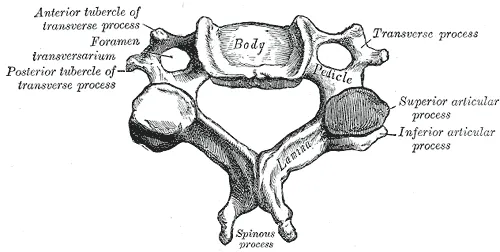
The spinal canal is the channel in the spine that holds the spinal cord. The Torg ratio is a measure of its width in the cervical vertebrae16. Studies of the ratio in players with stingers do not agree16,23:
- In neck X-rays taken before the season in 266 collegiate players, a ratio below 0.8 went with 3 times the risk of stingers16.
- In a prospective study, which follows people forward in time, of college players, a first stinger did not depend on the ratio23. Players with several stingers had smaller ratios than those with one (0.75 against 0.87)23.
- Of the 55 athletes with recurrent burners, 29 (53%) had narrow canals from development, and 48 (87%) had disc disease on MRI17.
One study read MRI of 103 male athletes at the NFL Scouting Combine24. The space available for the spinal cord predicted chronic stingers better than the Torg ratio24. The area under the curve, a score of how well a test sorts people, was 0.813 against 0.66124.
What studies found
How long it lasts
A 2025 review states that the vast majority of people with the condition recover completely in under 24 hours2. Two studies count time lost from play: NFL injury surveillance and a survey of young rugby players1,5.
| Group studied | Stingers with no lost time (%) |
|---|---|
| NFL in-game stingers, 2015 to 2019 | 76.411 |
| 569 young male rugby players, one season | 79.35 |
In the NFL data, when time was lost the mean was 4.79 days1. In the rugby study, 5.8% of stingers took more than 14 days to recover5. Its authors note that nerve deficits sometimes lasted beyond a month5. A 1977 case series described 13 cases of plexus axonotmesis, each in the upper trunk; 12 recovered within 3 to 42 weeks12.
Repeat stingers
Sources disagree on what repeat stingers mean for later injury14,25. A 2021 review of 28 studies of neck injuries in American football found stingers the most common injury25. It reported that stingers raised athletes’ risk of a later, more severe re-injury25. A 2025 review states that no studies have linked repeated burners with progression to a more severe injury of the axons14. It calls the risk of a repeat stinger unknown14.
Neck collars, equipment and neck training
Reviews describe little study of neck collars and neck rolls14,26. A 2005 literature review found one study that tested a collar against burners and other neck injuries in athletes26. In a 2003 lab study of 15 NCAA Division I football players, three collars reduced hyperextension, bending the neck back past its normal limit27. No collar reduced passive side-bending, and the authors note the results came from a lab, not active play27. A 2025 review states that the evidence on collars is limited mainly to case reports and case series14.
The questionnaire survey of 304 football players also looked at equipment and neck training3. From the players’ own answers, its authors concluded that current equipment and neck-strengthening programmes gave no protective benefit3. They called for further study3. A 2025 review states that no randomised controlled trials have tested whether proposed programmes lower repeat plexus injury14.
What the evidence lacks
A 2024 scoping review searched to August 2023 for studies on managing brachial plexus injury from contact sport9. It found 8 case reports covering 10 athletes, 9 of whom returned to competitive sport9. It found no trials, cohort studies or registry studies, so practice rests on expert opinion and general principles9.
What sources say about return to play
Sources of different designs report on return to play, and reviews describe little agreement6,7. A 2002 literature review found no consensus on a standard approach for return to pre-injury activity6. A 2024 review sets out the general criteria for return after neck injury7. In its account, the athlete has no symptoms, no nerve deficits and full, painless neck movement7. The same review states that physicians show little consensus on these recommendations7.
Across the 8 case reports in the 2024 scoping review, the most consistent return criterion was shoulder movement and strength without pain9. A 2009 review article states that athletes can often return after a single stinger that clears quickly28. In its account, repeat events, lasting pain or lost strength call for a full evaluation first28. It adds that some players with one or several stingers may be removed from collision or contact sport for good28.
A 2025 modified Delphi survey, which polls experts in rounds to work toward agreement, asked 34 sports spine surgeons8. It covered athletes with congenital stenosis, a neck spinal canal that is narrow from birth8. Agreement was set in advance at 70% or more of the panel8. The panel agreed that, once such an athlete has had 2 or more neurapraxic events, the advice given should be not to return to sport8.
Connections
Nerve testing after stingers placed the injury almost wholly at the upper trunk or the C5–C6 roots, a 2025 review reports2. Two reviews give C5 and C6 as the source of the axillary nerve, which makes the deltoid contract2,29. The grades of nerve injury, and how they recover, are covered on the nerve tissue page13,30. One review there describes neurapraxia as a temporary block that clears within 12 weeks once myelin is restored30.
The cervical vertebrae page reports the canal ratio for a different, brief injury of the spinal cord itself31. There, in football players, a ratio of 0.80 or less was too weak a predictor for screening31.
Thoracic outlet syndrome also involves the brachial plexus32. A 2022 European consensus names the plexus as one of three structures that can be squeezed in the thoracic outlet32.
Stinger involves the C5 and C6 nerve roots that also form
Stinger is graded on the nerve-injury scales described in
Stinger has studies of spinal canal width in
Stinger involves the brachial plexus, as does
Sources
- Lamplot JD, Petit C, Lee R, Mack CD, Herzog MM, Solomon GS, et al. (2024). Epidemiology of Stingers in the National Football League, 2015-2019.. Sports health. doi:10.1177/19417381231223413 PMID 38229225
- Farag JI, McDougall AN, Catapano M (2025). Common sports-related nerve injuries seen by the electrodiagnostic medical consultant.. Muscle & nerve. doi:10.1002/mus.28298 PMID 39535438
- Starr HM Jr, Anderson B, Courson R, Seiler JG (2014). Brachial plexus injury: a descriptive study of American football.. Journal of surgical orthopaedic advances. doi:10.3113/jsoa.2014.0090 PMID 24875339
- Charbonneau RM, McVeigh SA, Thompson K (2012). Brachial neuropraxia in Canadian Atlantic University sport football players: what is the incidence of "stingers"?. Clinical journal of sport medicine : official journal of the Canadian Academy of Sport Medicine. doi:10.1097/JSM.0b013e3182699ed5 PMID 23006981
- Kawasaki T, Ota C, Yoneda T, Maki N, Urayama S, Nagao M, et al. (2015). Incidence of Stingers in Young Rugby Players.. The American journal of sports medicine. doi:10.1177/0363546515597678 PMID 26337244
- Vaccaro AR, Klein GR, Ciccoti M, Pfaff WL, Moulton MJ, Hilibrand AJ, et al. (2002). Return to play criteria for the athlete with cervical spine injuries resulting in stinger and transient quadriplegia/paresis.. The spine journal : official journal of the North American Spine Society. doi:10.1016/s1529-9430(02)00202-4 PMID 14589466
- Kazarian GS, Qureshi S (2024). Return to Play After Injuries to the Cervical Spine.. Clinical spine surgery. doi:10.1097/BSD.0000000000001698 PMID 39374046
- Zuckerman SL, Jo J, Rigney GH, Bailes JE, Bonfield CM, Cantu RC, et al. (2025). Return-to-Sport Recommendations for Athletes With Congenital Cervical Spine Pathology: A Modified Delphi Consensus Survey of Expert Opinion.. Neurosurgery. doi:10.1227/neu.0000000000003576 PMID 40576340
- Armstrong R, McKeever T, Leavitt M, McLelland C, Hamilton DF (2024). Rehabilitation of brachial plexus injury in contact sport: Where are the data that underpin clinical management? A scoping review.. PloS one. doi:10.1371/journal.pone.0298317 PMID 38913647
- Bowles DR, Canseco JA, Alexander TD, Schroeder GD, Hecht AC, Vaccaro AR (2020). The Prevalence and Management of Stingers in College and Professional Collision Athletes.. Current reviews in musculoskeletal medicine. doi:10.1007/s12178-020-09665-5 PMID 32691363
- Ahearn BM, Starr HM, Seiler JG (2019). Traumatic Brachial Plexopathy in Athletes: Current Concepts for Diagnosis and Management of Stingers.. The Journal of the American Academy of Orthopaedic Surgeons. doi:10.5435/JAAOS-D-17-00746 PMID 30741724
- Clancy WG Jr, Brand RL, Bergfield JA (1977). Upper trunk brachial plexus injuries in contact sports.. The American journal of sports medicine. doi:10.1177/036354657700500508 PMID 907035
- Menorca RM, Fussell TS, Elfar JC (2013). Nerve physiology. Hand Clinics. doi:10.1016/j.hcl.2013.04.002 PMID 23895713
- Windmueller RA, Gbayisomore OO, Mead RL, Desai MJ, Bowman EN (2025). Brachial plexus injuries in the contact athlete: a narrative review.. Annals of joint. doi:10.21037/aoj-24-67 PMID 40385690
- Markey KL, Di Benedetto M, Curl WW (1993). Upper trunk brachial plexopathy. The stinger syndrome.. The American journal of sports medicine. PMID 8238703
- Meyer SA, Schulte KR, Callaghan JJ, Albright JP, Powell JW, Crowley ET, et al. (1994). Cervical spinal stenosis and stingers in collegiate football players.. The American journal of sports medicine. doi:10.1177/036354659402200202 PMID 8198181
- Levitz CL, Reilly PJ, Torg JS (1997). The pathomechanics of chronic, recurrent cervical nerve root neurapraxia. The chronic burner syndrome.. The American journal of sports medicine. doi:10.1177/036354659702500114 PMID 9006696
- Green J, Zuckerman SL, Dalton SL, Djoko A, Folger D, Kerr ZY (2017). A 6-year surveillance study of "Stingers" in NCAA American Football.. Research in sports medicine (Print). doi:10.1080/15438627.2016.1258642 PMID 27873542
- Sarac N, Haynes W, Pedroza A, Kaeding C, Borchers J (2017). Lifetime prevalence of injuries in incoming division I collegiate football players.. The Physician and sportsmedicine. doi:10.1080/00913847.2017.1386068 PMID 28952406
- Chung AS, Makovicka JL, Hassebrock JD, Patel KA, Tummala SV, Deckey DG, et al. (2019). Epidemiology of Cervical Injuries in NCAA Football Players.. Spine. doi:10.1097/BRS.0000000000003008 PMID 30830045
- Brinkman JC, Tummala SV, McQuivey KS, Hassebrock JD, Pagdilao C, Makovicka JL, et al. (2021). Epidemiology of Spine Injuries in National Collegiate Athletic Association Men's Wrestling Athletes.. Orthopaedic journal of sports medicine. doi:10.1177/23259671211032007 PMID 34497862
- Hakkaku T, Nakazato K, Koyama K, Kouzaki K, Hiranuma K (2017). Cervical Intervertebral Disc Degeneration and Low Cervical Extension Independently Associated With a History of Stinger Syndrome.. Orthopaedic journal of sports medicine. doi:10.1177/2325967117735830 PMID 29147669
- Castro FP Jr, Ricciardi J, Brunet ME, Busch MT, Whitecloud TS 3rd (1997). Stingers, the Torg ratio, and the cervical spine.. The American journal of sports medicine. doi:10.1177/036354659702500503 PMID 9302463
- Presciutti SM, DeLuca P, Marchetto P, Wilsey JT, Shaffrey C, Vaccaro AR (2009). Mean subaxial space available for the cord index as a novel method of measuring cervical spine geometry to predict the chronic stinger syndrome in American football players.. Journal of neurosurgery. Spine. doi:10.3171/2009.3.SPINE08642 PMID 19769507
- Swiatek PR, Nandurkar TS, Maroon JC, Cantu RC, Feuer H, Bailes JE, et al. (2021). Return to Play Guidelines After Cervical Spine Injuries in American Football Athletes: A Literature-Based Review.. Spine. doi:10.1097/BRS.0000000000003931 PMID 34100841
- Stuber K (2005). Cervical collars and braces in athletic brachial plexus injury and excessive cervical motion prevention: a review of the literature.. The Journal of the Canadian Chiropractic Association. PMID 17549136
- Gorden JA, Straub SJ, Swanik CB, Swanik KA (2003). Effects of Football Collars on Cervical Hyperextension and Lateral Flexion.. Journal of athletic training. PMID 14608429
- Standaert CJ, Herring SA (2009). Expert opinion and controversies in musculoskeletal and sports medicine: stingers.. Archives of physical medicine and rehabilitation. doi:10.1016/j.apmr.2008.09.569 PMID 19254603
- Ayik G, Kolac UC, Kaymakoglu M, McFarland E, Huri G (2025). Dark side of the shoulder: suprascapular and axillary nerve compressions.. International Orthopaedics. doi:10.1007/s00264-025-06465-9 PMID 40082300
- Grinsell D, Keating CP (2014). Peripheral nerve reconstruction after injury: a review of clinical and experimental therapies.. BioMed Research International. doi:10.1155/2014/698256 PMID 25276813
- Torg JS, Naranja RJ Jr, Pavlov H, Galinat BJ, Warren R, Stine RA (1996). The relationship of developmental narrowing of the cervical spinal canal to reversible and irreversible injury of the cervical spinal cord in football players.. The Journal of bone and joint surgery. American volume. doi:10.2106/00004623-199609000-00003 PMID 8816644
- Dengler NF, Ferraresi S, Rochkind S, Denisova N, Garozzo D, Heinen C, Alimehmeti R, Capone C, Barone DG, Zdunczyk A, Pedro MT, Antoniadis G, Kaiser R, Dubuisson A, Kretschmer T, Rasulic L (2022). Thoracic Outlet Syndrome Part I: Systematic Review of the Literature and Consensus on Anatomy, Diagnosis, and Classification of Thoracic Outlet Syndrome by the European Association of Neurosurgical Societies' Section of Peripheral Nerve Surgery.. Neurosurgery. doi:10.1227/neu.0000000000001908 PMID 35319532
Changes
- First published.